


イケムラレイコ
Leiko Ikemura
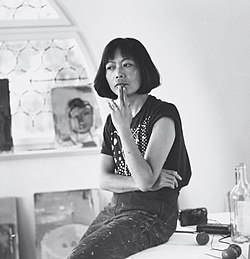
池村玲子(Leiko Ikemura、1951年三重県津市生まれ)は、ベルリンとケルンを拠点に活動する現代美術家。絵画、ドローイング、彫刻、陶、写真など多様な表現を行い、少女像や兎(うさぎ)のモチーフを象徴的に扱い、変容、自然、文化の境界をテーマとしている。
1970〜72年に大阪外国語大学でスペイン語を学んだ後、スペインのセビリア美術大学で1973〜78年に美術を学ぶ。1979年にチューリッヒで制作活動を開始し、1980年代からドイツに移りネオ・エクスプレッショニズムの中核で活動。
1991年にベルリン芸術大学の絵画科教授となり2015年まで教鞭をとる。2014年より女子美術大学教授。現在もドイツと日本を拠点に制作を続ける。
主な展覧会
2011年:「変容 Transfiguration」 東京国立近代美術館(東京)
2013年:「i-migration」 カールスルーエ州立美術館(ドイツ)
2019年:「Leiko Ikemura: Our Planet — Earth & Stars」 国立新美術館(東京)
2019年:「Leiko Ikemura: Toward New Seas」 バーゼル美術館(スイス)
Leiko Ikemura (born 1951 in Tsu, Mie Prefecture, Japan) is a contemporary artist based in Berlin and Cologne. Her work spans painting, drawing, sculpture, ceramics, prints, and photography. Ikemura is known for recurring motifs such as young female figures and rabbit forms, exploring themes of transformation, nature, and cross-cultural identity.
She studied Spanish at Osaka University of Foreign Studies from 1970 to 1972, and then studied fine arts at the Escuela Superior de Bellas Artes de Santa Isabel de Hungría in Seville, Spain, from 1973 to 1978. In 1979 she moved to Zurich and began her professional artistic career. During the early 1980s she moved to Germany, where she became involved in the Neo-Expressionist movement.
In 1991 she was appointed Professor of Painting at the Berlin University of the Arts, a position she held until 2015. Since 2014 she has also been a professor at Joshibi University of Art and Design in Japan. She continues to live and work between Germany and Japan.
Selected Exhibitions
2011 — Leiko Ikemura: Transfiguration, The National Museum of Modern Art, Tokyo (Japan)
2013 — Leiko Ikemura: i-migration, Staatliche Kunsthalle Karlsruhe (Germany)
2019 — Leiko Ikemura: Our Planet — Earth & Stars, The National Art Center, Tokyo (Japan)
2019 — Leiko Ikemura: Toward New Seas, Kunstmuseum Basel (Switzerland)